Past
Year 1 & Year 2
‘The first major lessons in my education began with TU/explore, a group boardgame project for CBL1. My partners and I entered with engineer’s mindsets, expecting perfection of ourselves and being unwilling to experiment and leave things to the imagination. This cemented my value in strong technical skills and high quality work outputs while challenging me to make more freely without scientific justification for my decisions. This was a special project because I took on a leadership role for our team that helped me develop my principles for teamwork and discover my strength in communication and teamwork.
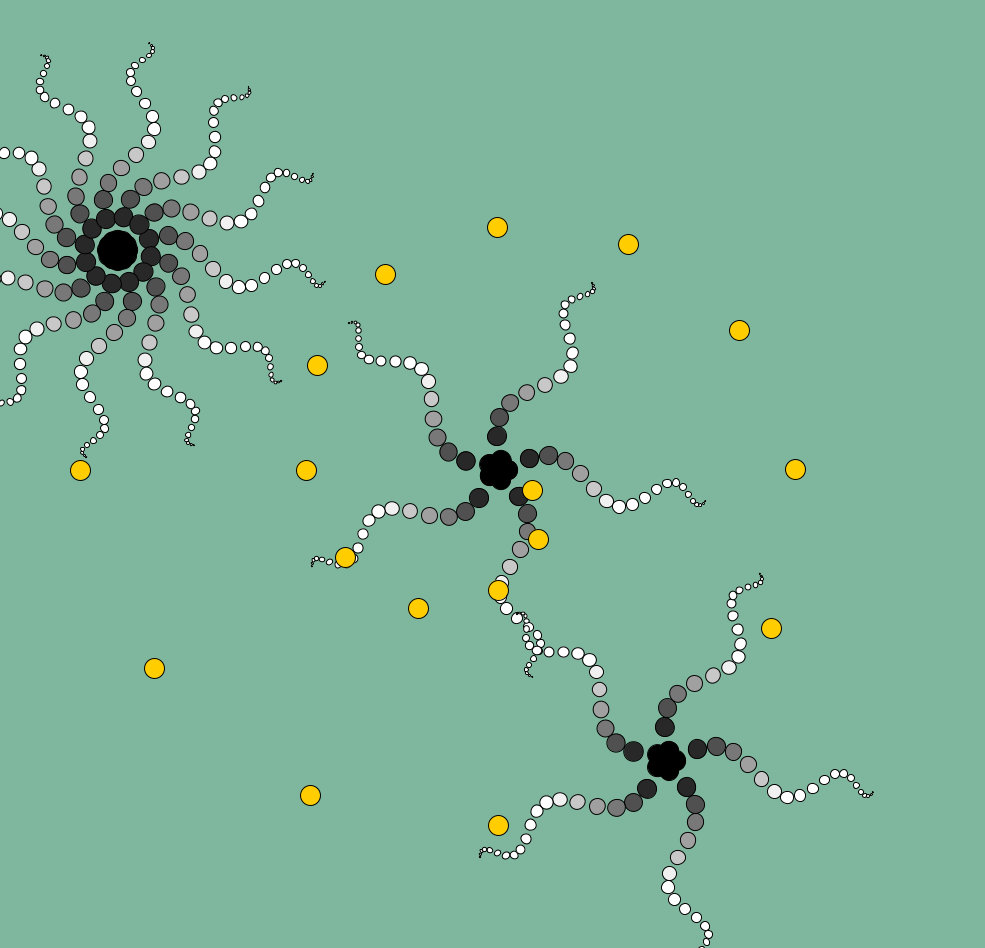
During the second semester, I worked on developing my digital skills and interest in electronics through my Creative Programming projects, a course in Data Analytics and the Date Snake and El Briano (Arduino Robots) CBL Project. I found myself overwhelmed for choice and seeking perfection during my extensive solo work, leading me to reflect that the lack of tangibility and human interaction brought on by digital engineering disallowed me from pausing to reflect and make design decisions. I developed a love for data processing because of it’s logical use, but found the other project outcomes, while technically impressive, uninspiring because I become uncreative in highly technical environments.


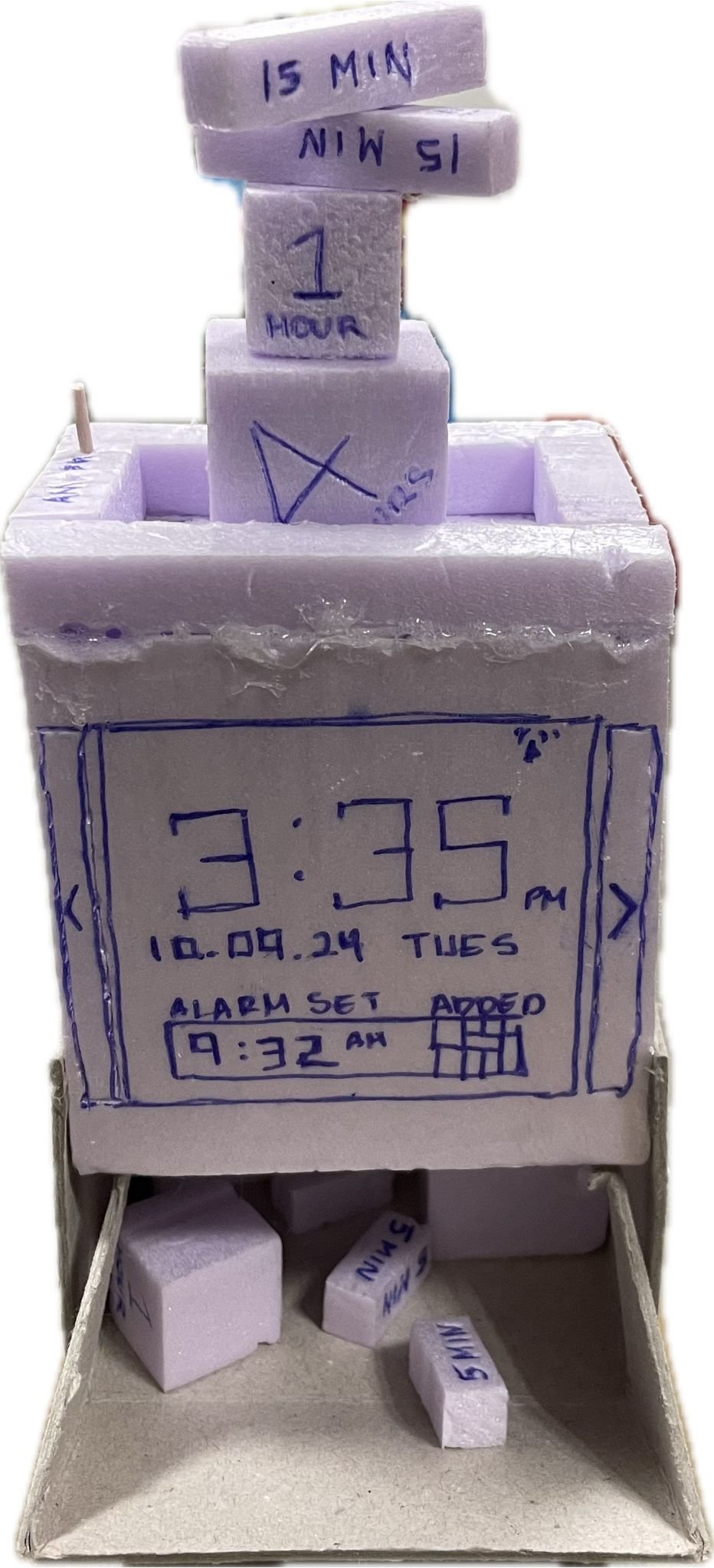
In the Aesthetics of Interaction course, I addressed my goal of balancing technicality with creativity by stepping away from digital tools and iteratively making lo-fi physical prototypes inspired by Bachenau & Suri’s “Experience Prototyping” and Kristina Andersen’s “Magic Machine Workshops" to focus on aesthetics by imagining function. The approach of iterative, imaginative exploration through handcrafting before high quality technical realisation became my design practice because it yielded well-developed and likeable concepts while making the design process manageable and directed.

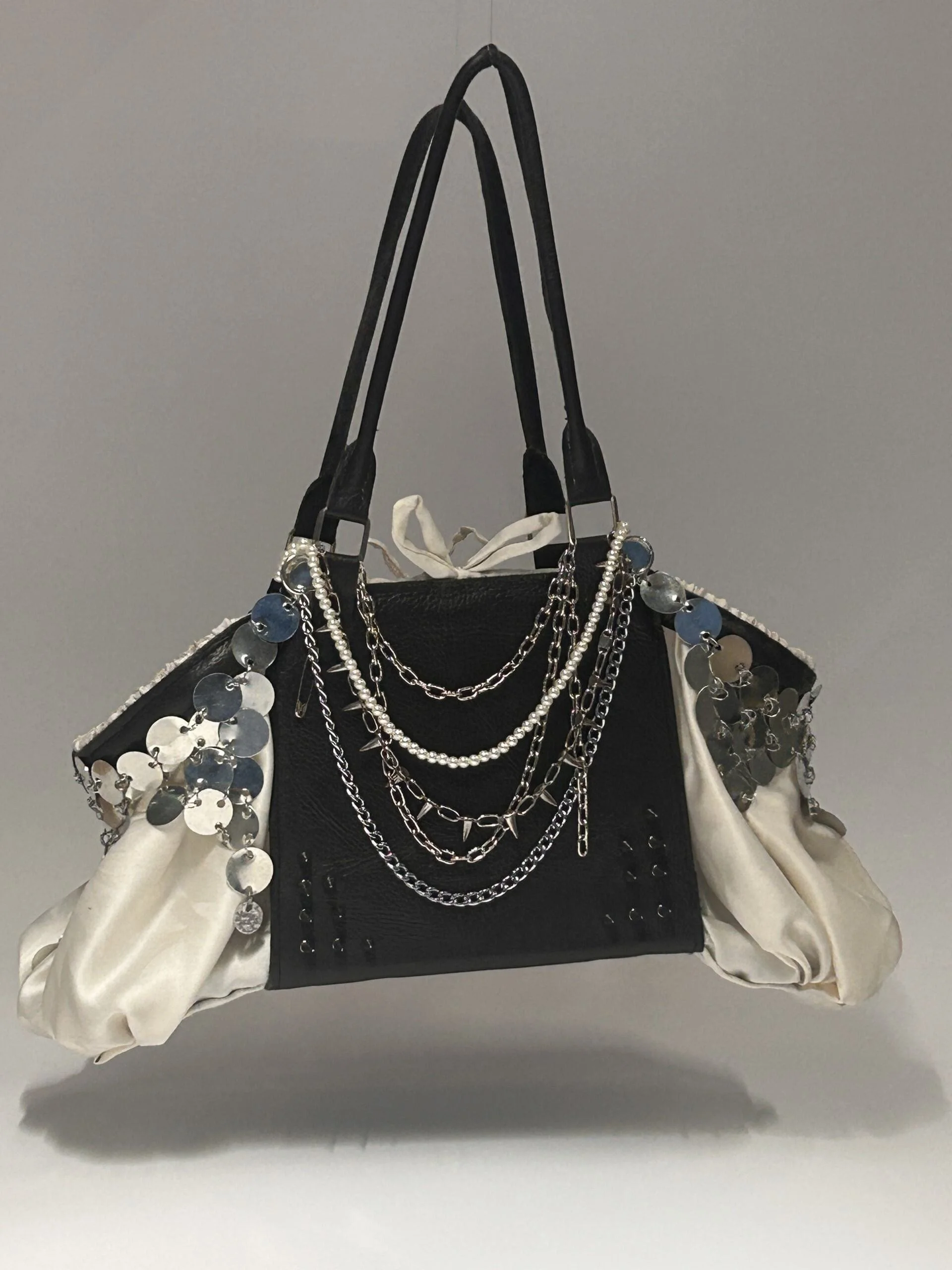
Delice de Magie was my passion project, forming the basis for my "dreamer's vision”and co-creative working style. This bag-making project explored the intersection between user research through workshopping, design exploration through making, high quality technical craftsmanship and serious self reflection through data and system mapping to produce a designer's toolkit for "Feelings Based Design.” The skills I learned and presented in this toolkit enable a reliable strategy for collaborative storytelling through design that allows us to reshape our worldly experience.
Image: Final Product from Delice de Magie
Seeking to further my research strategies through user engagement, I developed a probe kit with a team that uses structured activities for participants to document their student home social dynamics. The strict implementation of research goals in the design of the probe kit taught me how to selectively narrow the scope of my user research to produce more meaningful data. This carried forth into the Rebellion Dinner speculative design project where I worked with a team to design a dinner party for invited guests to immerse themselves in a hypothetical dystopia we had imagined. By engaging the guests to participate in the fantasy and use their playful imaginations, we were able to extract meaningful data about topics they considered dystopian to inform potential future design intervention opportunities. This project , taught by Gabreile Ferri, introduced me to the concept of imagining new possibilities with others, and how to orchestrate that interaction in a playful and creative way that honors my love of storytelling and worldbuilding.


Alongside these small-scale explorations of individuals and communities, I have taken theory-heavy courses: Design in Context, Intercultural Design and Sustainability & Design. I sparked an interest in the subconscious impacts made by designers: embodied cognition, complexity theory and more-than-human design. I feel drawn to reflect more deeply on my work and it’s ethical impacts- whether or not it should be even created- as a result. I also find myself equipped with a set of skills to assess and comprehend the systems that my designs impact, allowing me to follow the path of a social designer to introduce meaningful interventions into those systems.
I am averse to prioritizing profit because it conflicts with my values on sustainability and slowing down, which is why I disconnect from business-minded approaches to design. However, the Trends and Forecasting elective introduced strategies of predicting and interpreting the market in a light that presented the designer as responsible for the direction of our society. I have taken an interest in providing business plans for my projects because I believe it is possible to inspire the business trend of slowing down. By improving my entrepreneurial skills, I will be better equipped to assess the impact of my design interventions and shape their outcome while respecting the need for feasibility.
My final academic project was an interdepartmental CBL where I collaborate with architecture and psychology students to design a lighting solution for the TU/e auditorium. The project reassured my teamwork skills as I adapted to greater individual work with limited meeting time, reflecting the experience of a professional designer consulting with stakeholders and contractors. By designing the concept using creative handmaking techniques, I set myself up to finally take on digital technologies again. Using 3D modelling and TouchDesigner programming, I created high quality prototypes that felt delightful and beautiful, unlike my second semester projects. This marked the completion of an important goal to balance creativity with technology to align myself with my values of simultaneous quality and whimsy.

Image: Demo Day for CBL 1