Present
Final Bachelor Project - Woven Spirits
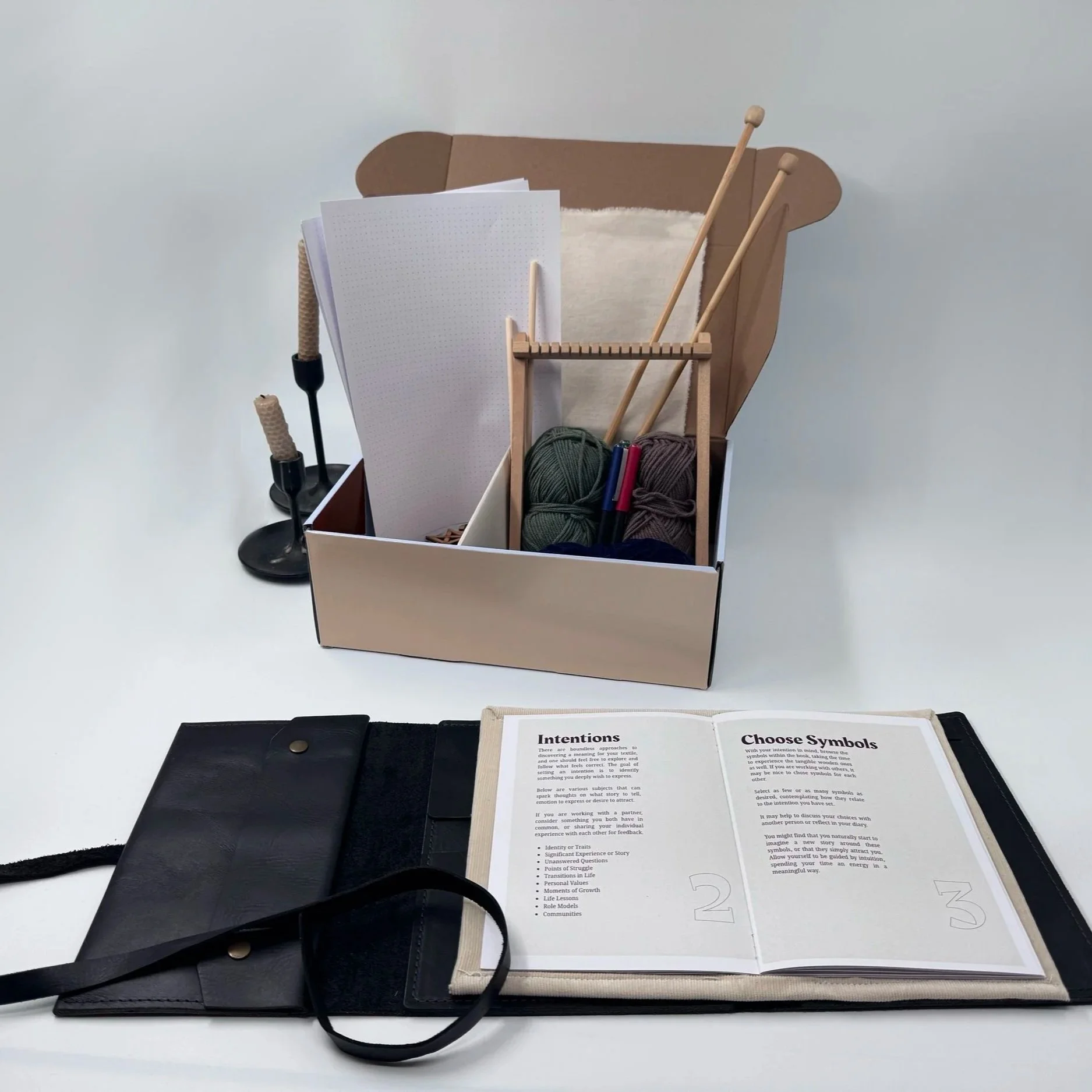
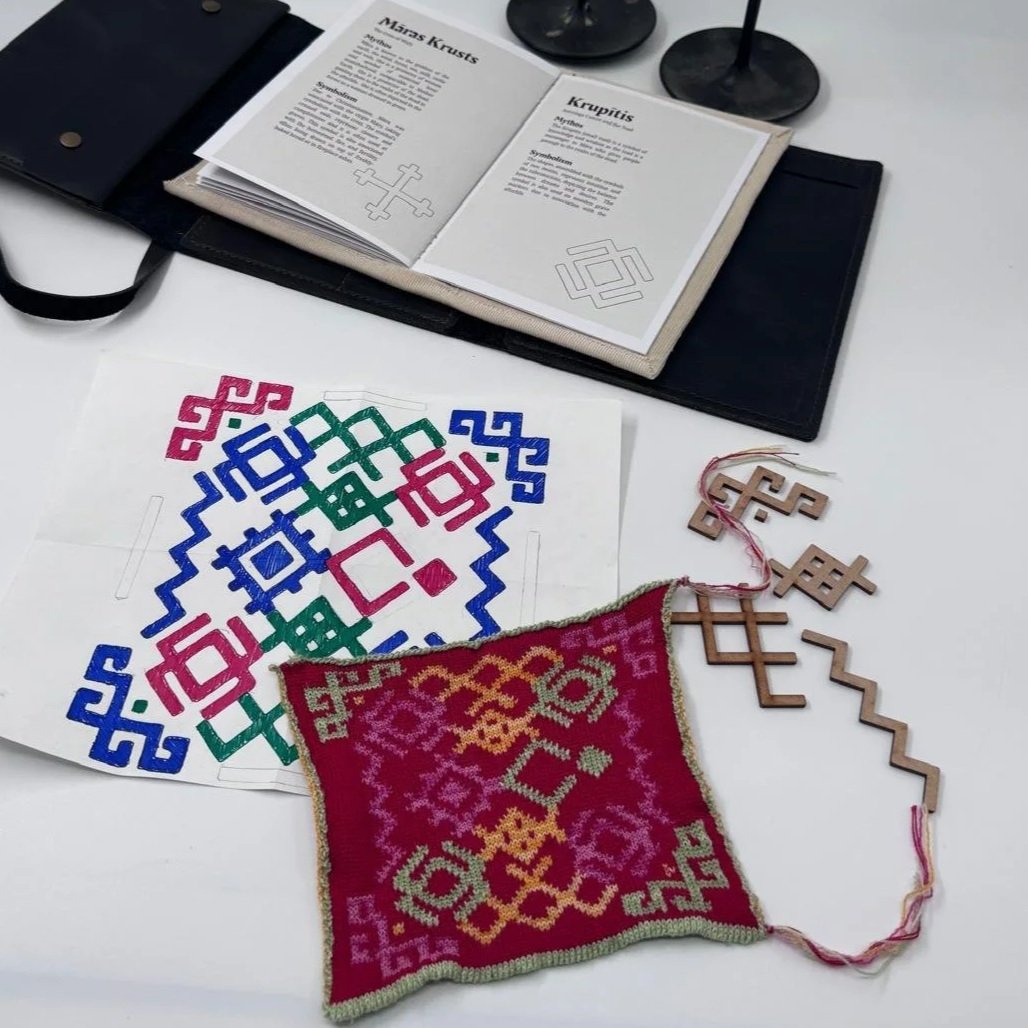
Woven Spirits, is a ritual toolkit to tangibly design emotionally-driven textiles.
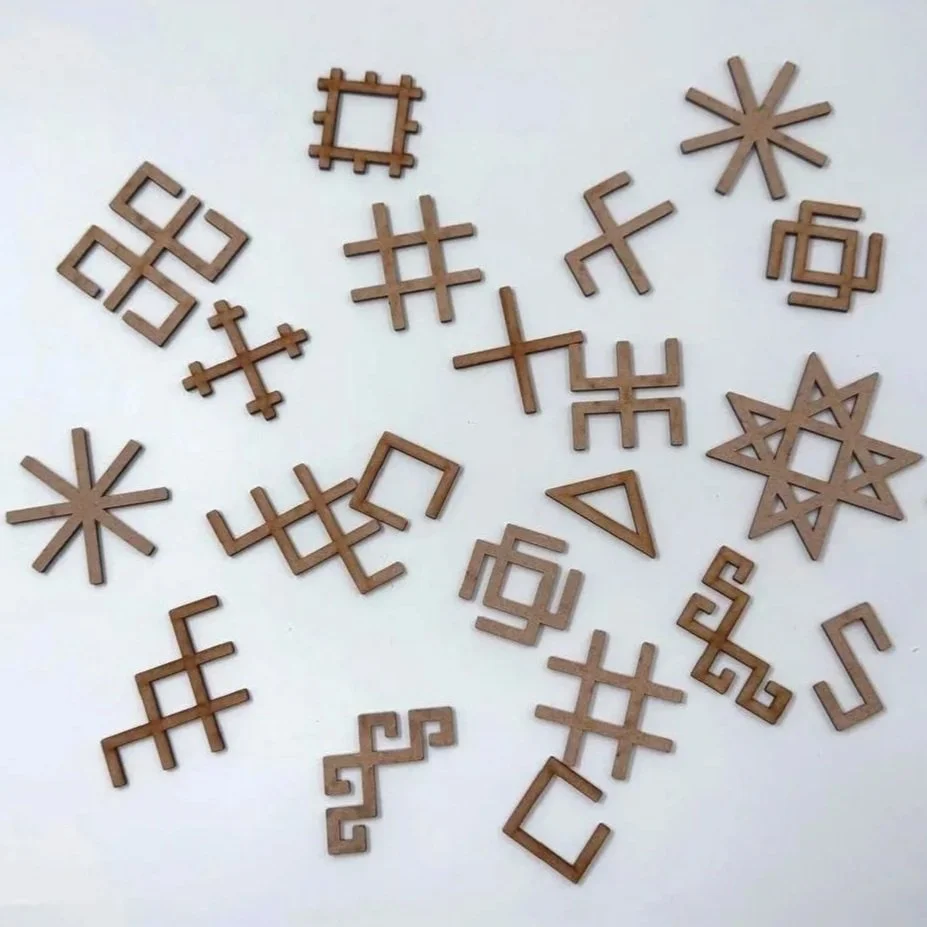
The aim of this toolkit is to provide grid-based textile crafters with a replicable framework for self reflection and expression through the creation of aesthetically pleasing textiles using the principles behind Latvian symbol magic and pagan spiritualism.
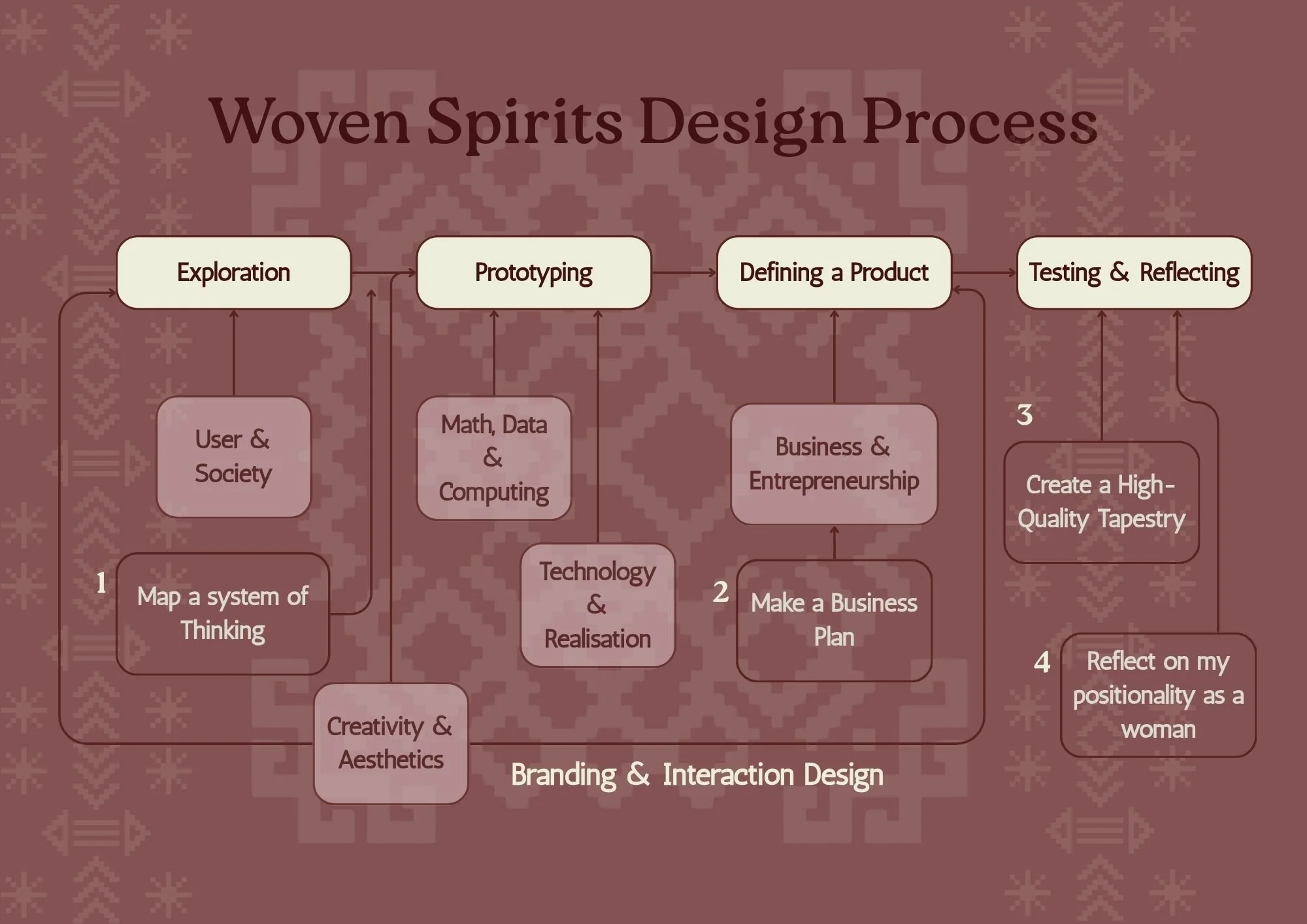
I set four goals for the project to address my areas of overall weakness in the expertise area framework and in relation to my PI&V. I planned to address each goal within the different phases of my emergence-driven design process.
-
I still value a scientific approach to design in the form of creating replicable frameworks for thinking and making and set the goal to map a system of thinking or making that could be replicated and described by another. It was very important for me to design a tool that decentred digital technologies and facilitated an emotionally-driven design process through tangibility and cultural significance.
Within my toolkit is a booklet that describes in steps, which users both followed and described as clear, how to conduct a ritual design process with Woven Spirits. The making system consistently results in artworks that meet the criteria for processing with a pixelation program I designed while remaining emotionally meaningful and aesthetically pleasing.
Furthermore, I have created a diagram documenting the connections between my research questions and design activities that has acted as a useful tool for retracing my steps and reflecting on the outcomes of my decisions in a way that can be shared with others.
-
I now recognize that business methods are an important way to evaluate whether and how designs fit into society, particularly such that they can have an impact on people beyond the design research world. As this skill was a weakness of mine, I addressed it by producing a detailed and researched business plan.
Significant research went into analysing the market (competitor profile matrix & trends analysis) to refine the product description and value proposition to offer unique or demanded features. In one case, I eliminated expert makers from my target audience, recognizing that they were a small market who had little demand for such a product, while learning (also through user testing feedback) that Latvian culture enthusiasts would be a greater market. This insight allowed me to reflect on the societal impact of designing a Latvian culture kit that mainly appeals to tourists and consider ways of platforming Latvians in the design and marketing process.
-
I believe high quality, aesthetically-pleasing products are important ways of establishing emotional connections between people and designs that give them the value to persist in people’s lives. I intended to produce a specific high-quality tapestry, particularly to challenge myself to learn a skill, but also to assure a valuable outcome.
I used Woven Spirits to design a beautiful tapestry that I find extremely personally meaningful, which was made for me on the Kniterate machine. I consider this proof of success in producing a high-quality tapestry that will persist in my life.
However, in contrast to my value of slowing down, I did not make this tapestry using the hand-weaving techniques I had learnt at the beginning of the project. I question the balance between time-intensive making and rapid iteration as I recognize the need to prioritize new information in a design research process.
-
As a designer who seeks to complement individuality and cater to niche communities, I find it important to challenge myself to be aware of and work with the biases that accompany my perspective. I chose to study women’s wellbeing through the lens of pagan spiritualism and craftsmanship in order to define and reflect on my personal identity as a woman.
Through my workshops, I found value in sharing stories with other women, learning from them how strength, role models and self awareness shaped their identities. I learnt how our knowledge of women’s history is limited by a lack of first-hand written documentation, which I addressed through my design by teaching others how to interpret and use symbols incorporated by pagan Baltic women in their weaving. In making my own tapestry, I chose to resolve an attitude of victimhood I had about being a woman to liberate myself of my grudge.
As a woman aware of women’s position in society, I believe in facilitating stronger communities of women and centring our practices in society because I believe it helps us accept ourselves.